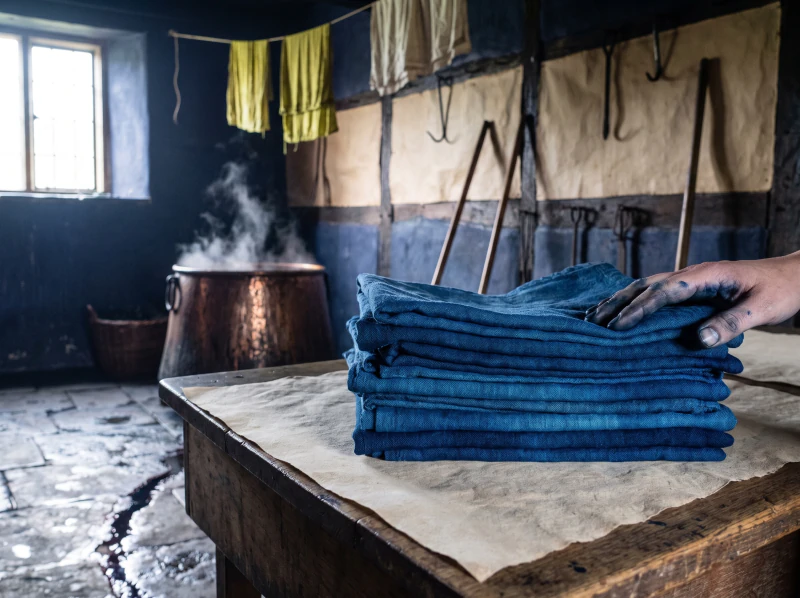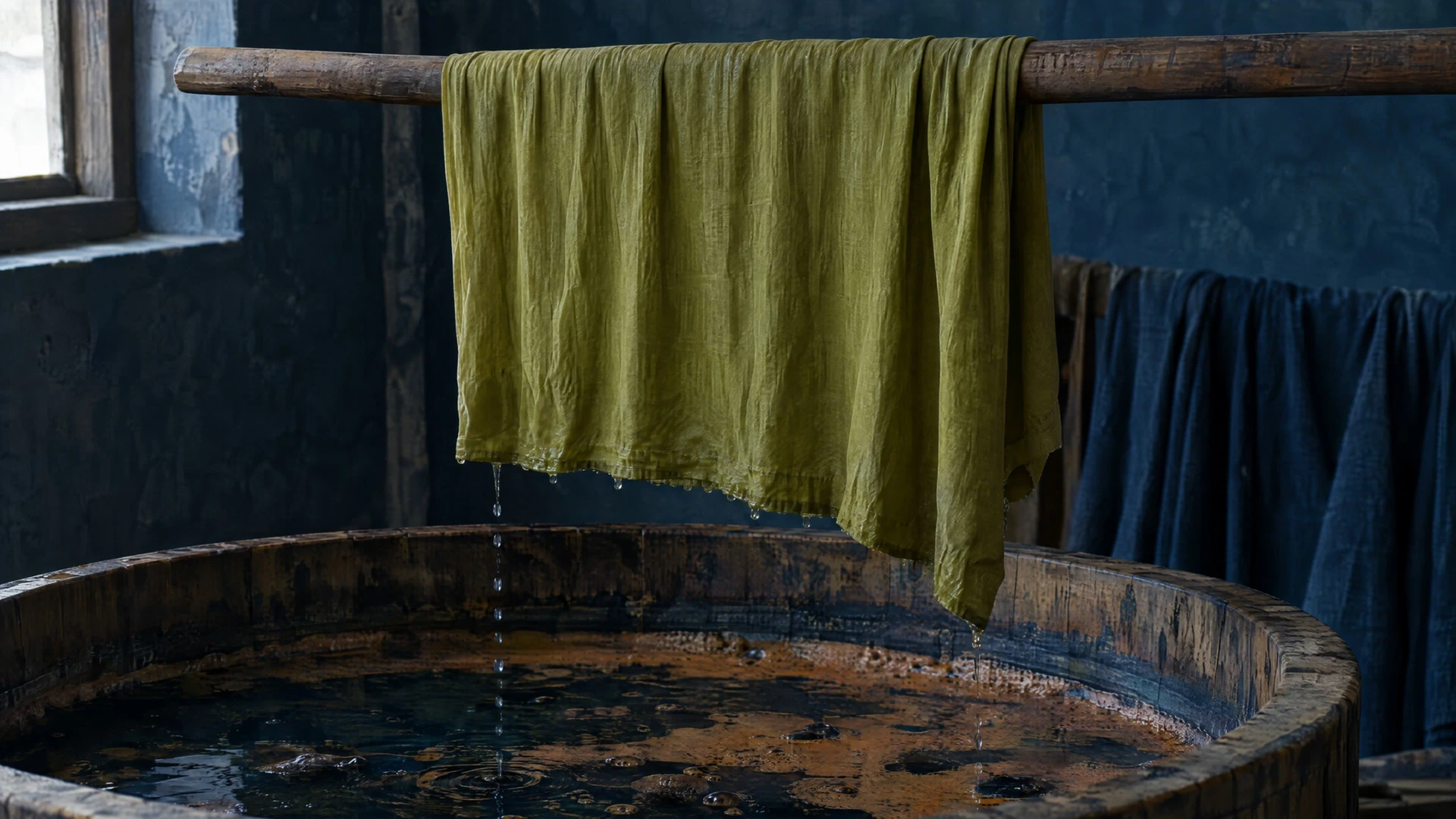
Leaf to cloth, in the order it happens.
-
I cut the leaf in the morning while it is cool, and it goes into water the same day.
-
The leaf ferments in a warm vat until it smells sweet and the surface turns the colour of copper.
-
Cloth goes in slowly and comes out yellow green. Nothing looks right yet, which is the point.
-
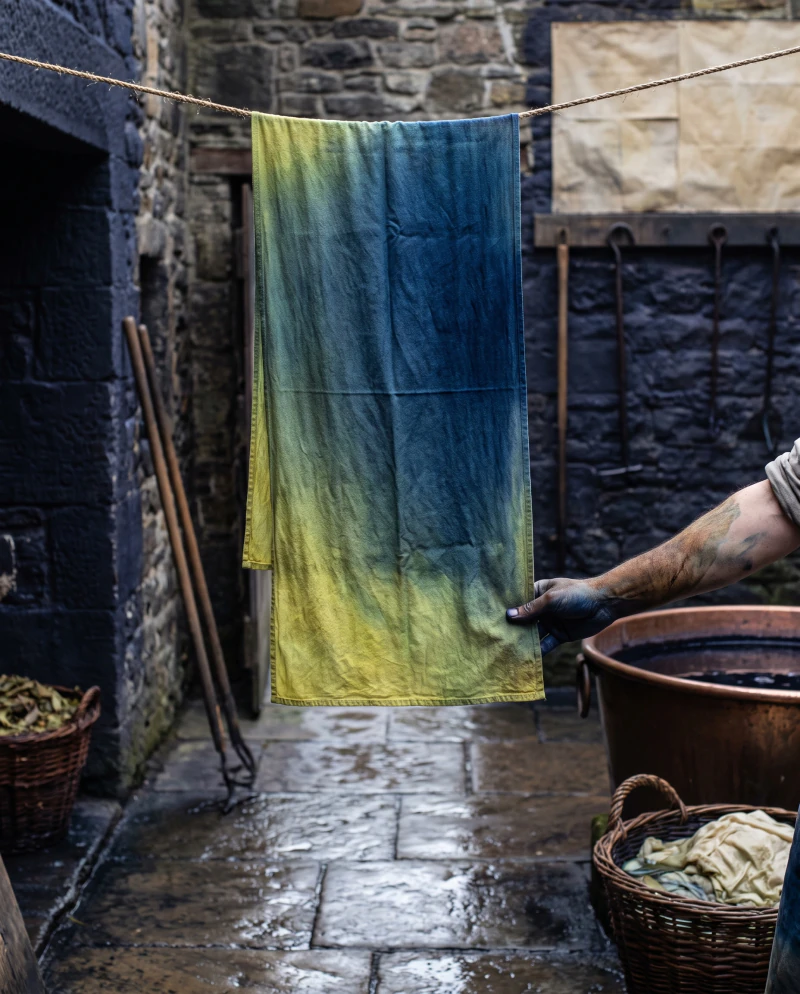
In the air the green turns blue in front of you. I hang it and wait.
-
Rinse, rest, rinse again, until the water runs clear and the blue stops moving.
Every chapter ends with cloth you can hold, not a description of it.





A bolt of undyed linen, wanted for a set of curtains.
The vat woke up overnight and is ready to take cloth.
First dip done. Pale so far, which is how it should be.
Another dip hanging in the yard, the blue settling.
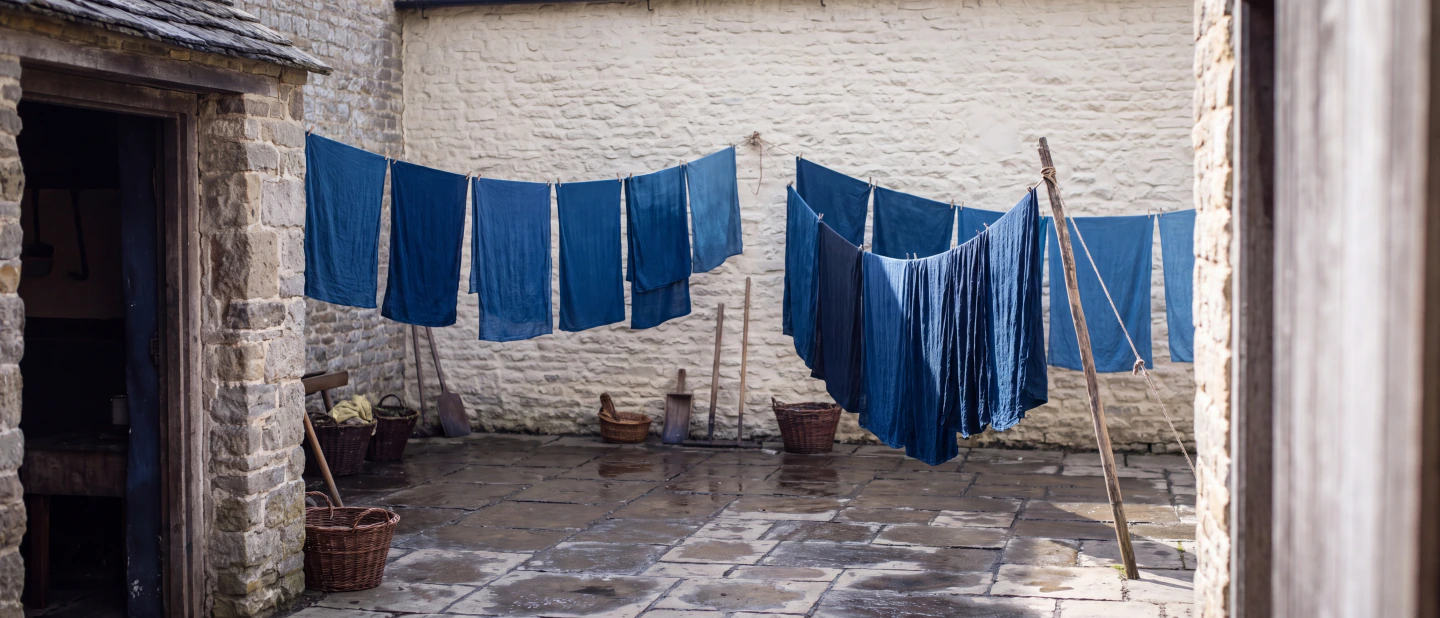
Washed, dried, folded. The colour it will keep.



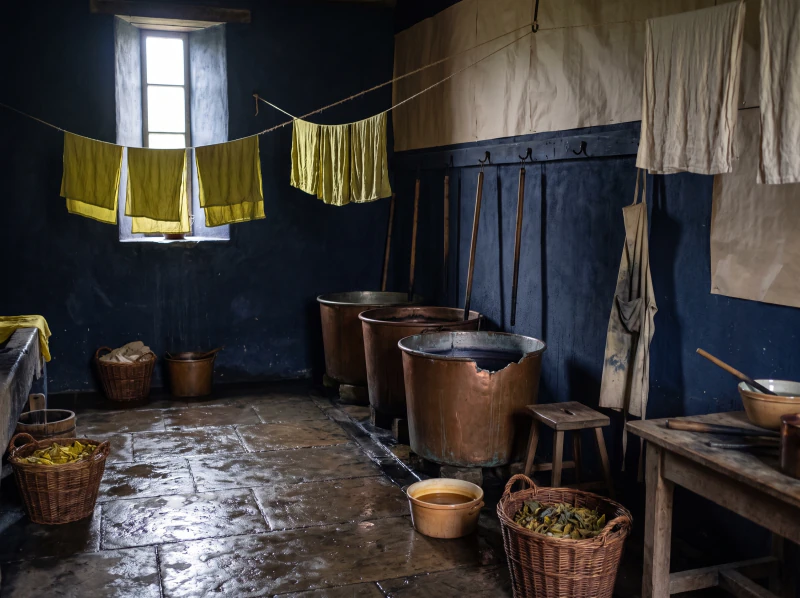
One dyer, a small team, and the vats.
I started the house because the blue I wanted was not for sale. The people here keep the vats warm and the lines full.

- Isolde VellisFounder and dyer
- Ottilie CobbledenVat keeper
- Casimir LindlehurstYard and drying
- Priya ThistlewaiteCloth and orders
I dye what the vats can hold. When they are full I tell you the week they empty.
What people ask before they send cloth.
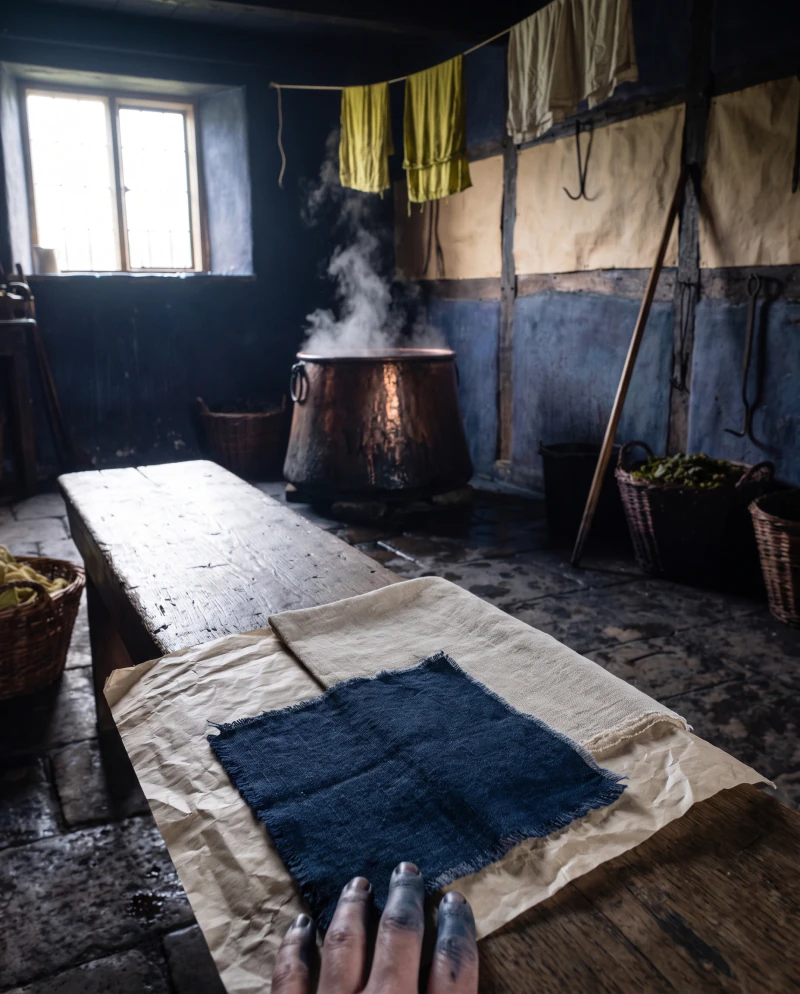
- Does the colour fade?It softens over the years and stays blue. That is how indigo behaves and I would not sell it as anything else.
- I have a swatch. Will mine come out the same?Near it, never on it. Indigo is a depth, not a mix, so I dip until the swatch and the cloth sit together in daylight, and stop there.
- Do you dye cloth I send you?Yes, if it is a natural fibre and washed first. I say what it will take before it goes in.
- When does my cloth come back?The vat decides. It takes cloth when it is ready and not before, and a deep blue wants several dips with rest between. I give you a week, not a day.
- Can I visit while my cloth is in the vat?Yes. Dip days are open to the people whose cloth it is.
Show me the cloth. I will say how blue it can go.
A photo of the cloth and a word about the blue is enough. I look at the fibre, choose the vat, and come back with the week it could go in.
Or ask the assistant on this page. It knows the method.